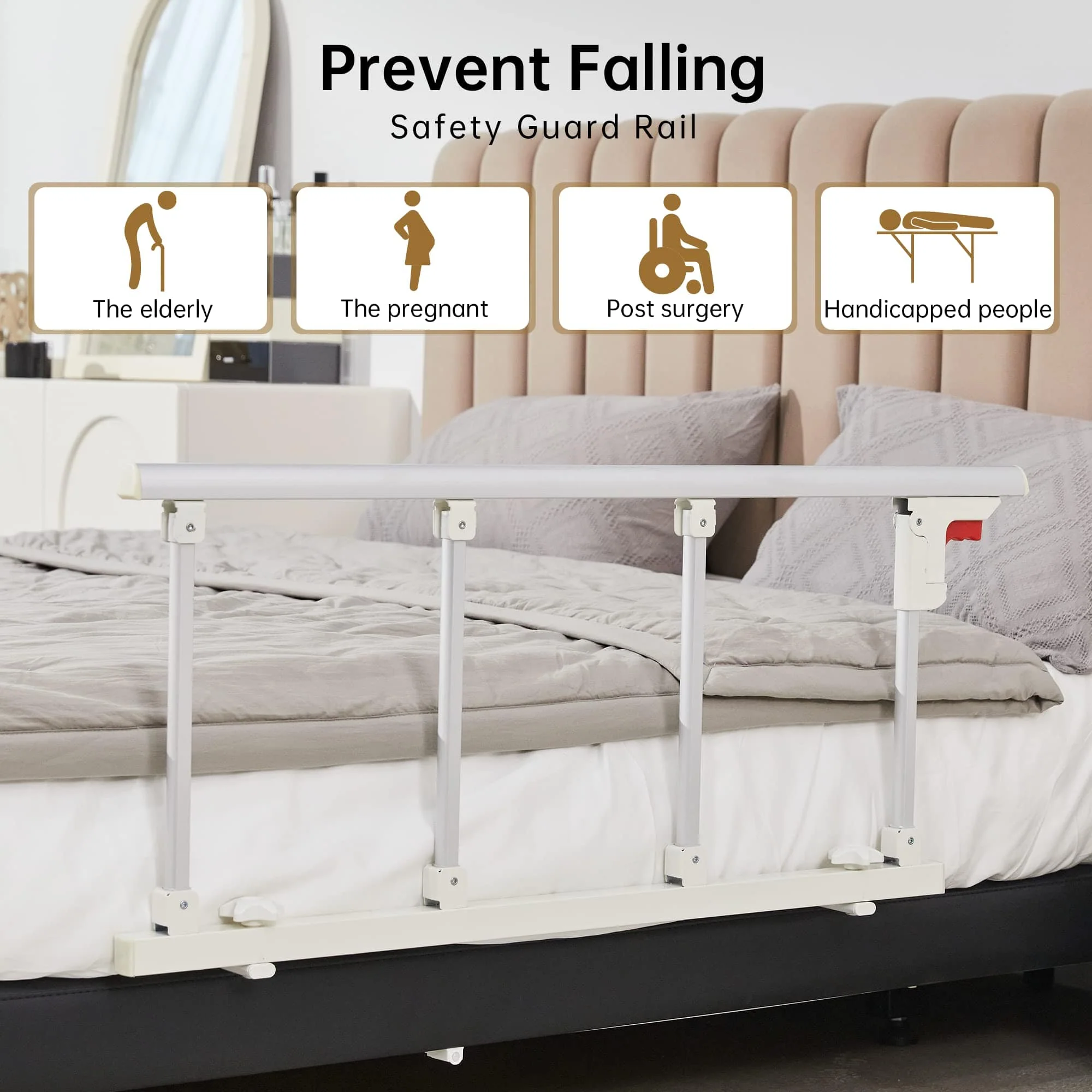
When getting in and out of bed feels more like climbing a mountain than a quick hop, it might be time to think about a medical bed rail. Whether it’s for balance, safety, or just some added peace of mind, bed rails can really help seniors feel more secure at night — and make life a little easier for caregivers too.
But how do you know which one to pick? There are tons of options out there, and honestly, some are great… while others are just awkward hunks of metal.
1. Strong and Sturdy Bed Rail Frame – No Wobbles Allowed
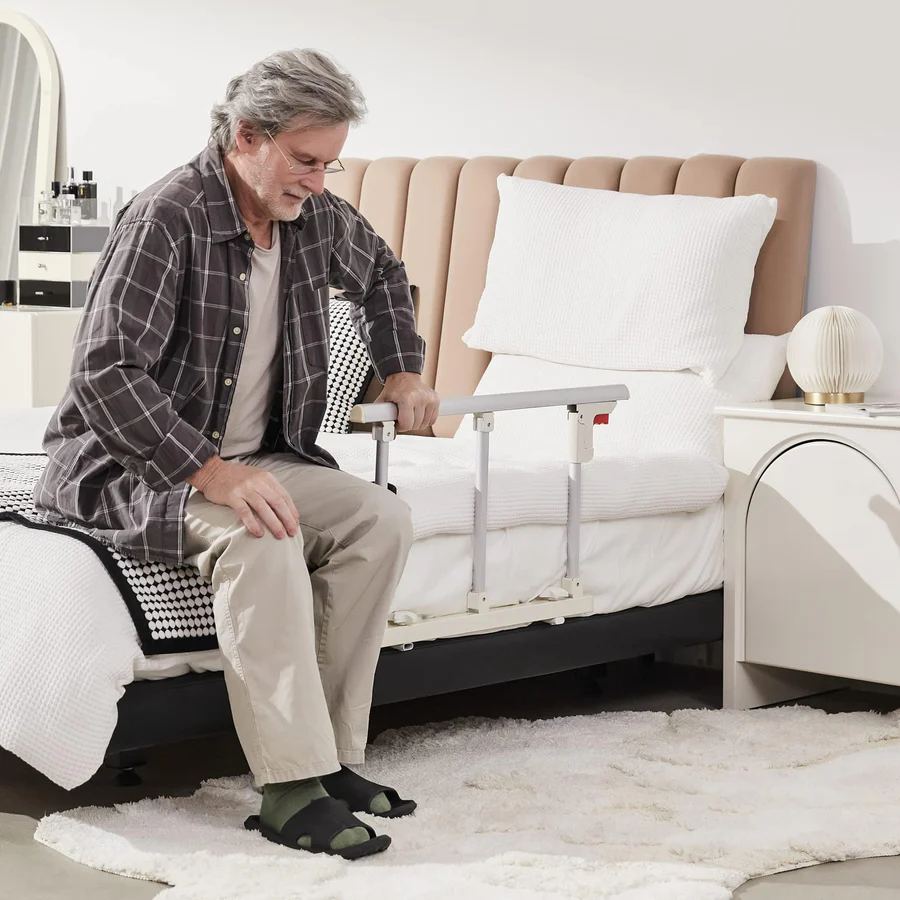
First things first — it’s gotta be solid. If the rail shakes or flexes when you put weight on it, that’s a no-go. Seniors need a rail they can trust to lean on when getting in or out of bed, especially if their balance isn’t great or they’ve had falls before.
Look for rails made of steel or aluminum with a good weight capacity (at least 250 lbs or more is pretty standard). Bonus points if it attaches firmly to the bed frame or tucks securely under the mattress.
2. Easy Bed Rail Grip Handle – Comfort Is Key
Nobody wants to grab a cold, slippery metal bar in the middle of the night. A good bed rail should have a padded or textured handle that’s easy to hold — even with weaker hands, arthritis, or limited dexterity.
Some rails have foam grips that feel soft and secure. Others come with ergonomic shapes that just feel right when you’re pulling yourself up. The grip should be gentle on the hands but strong enough to hold up when you need it.
3. Bed Rail Adjustable Height – Because Beds Aren’t All the Same
Bed heights vary — a lot. From low platform beds to super-high adjustable ones, a rail that only fits one height doesn’t cut it.
Go for a rail with adjustable height settings. That way, whether you’ve got a twin bed or a California king, or whether the mattress is thin or thick, the rail can sit at just the right level for safe, easy use.
Also, check that it’s easy to adjust — no tools, no fuss. Just a few knobs or push-buttons, and you’re set.
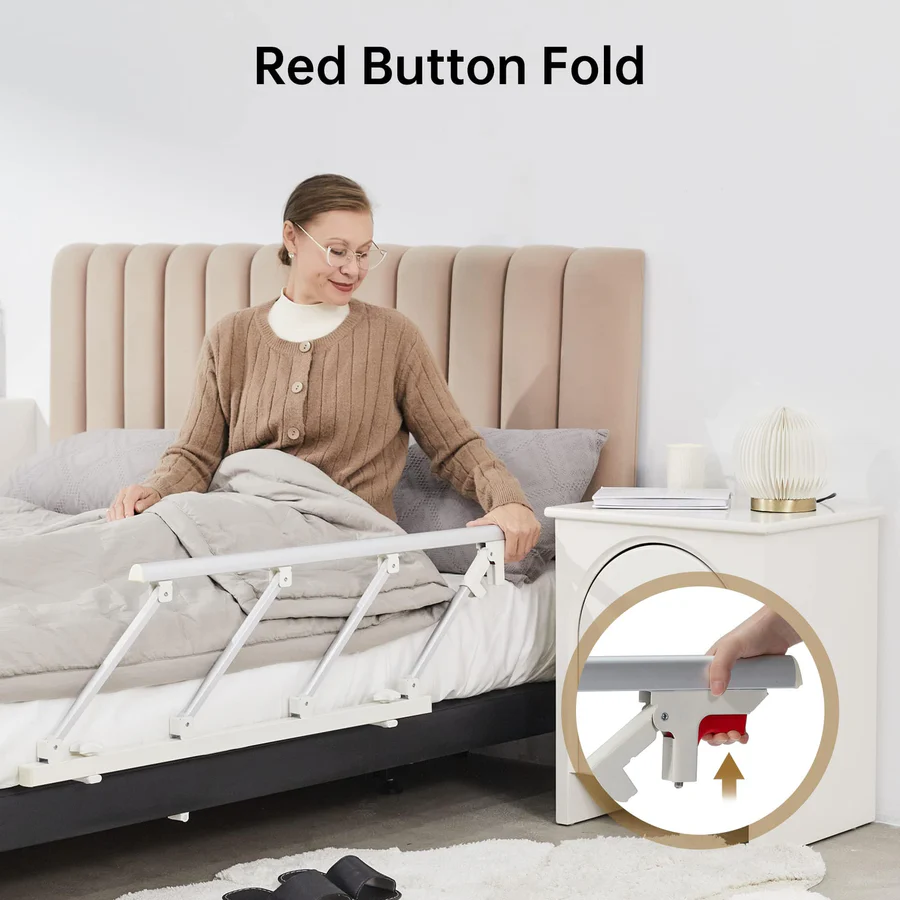
4. Fold-Down or Swing-Away Feature – For Easy Access
Sometimes you need the rail there. Other times, you need it out of the way. A fold-down or swing-away rail is super handy when:
- A caregiver needs to help someone in bed
- The user wants to get out of bed from the other side
- You’re changing the sheets
- You’re just trying not to trip over it in the dark
If that kind of flexibility sounds useful, make sure the folding mechanism is smooth but secure. You don’t want it to drop unexpectedly — or to need super strength to move it.
5. Tool-Free Installation – No Screws, No Drama
Let’s face it — most of us aren’t trying to become handymen just to install a bed rail. Luckily, lots of models now come with tool-free installation.
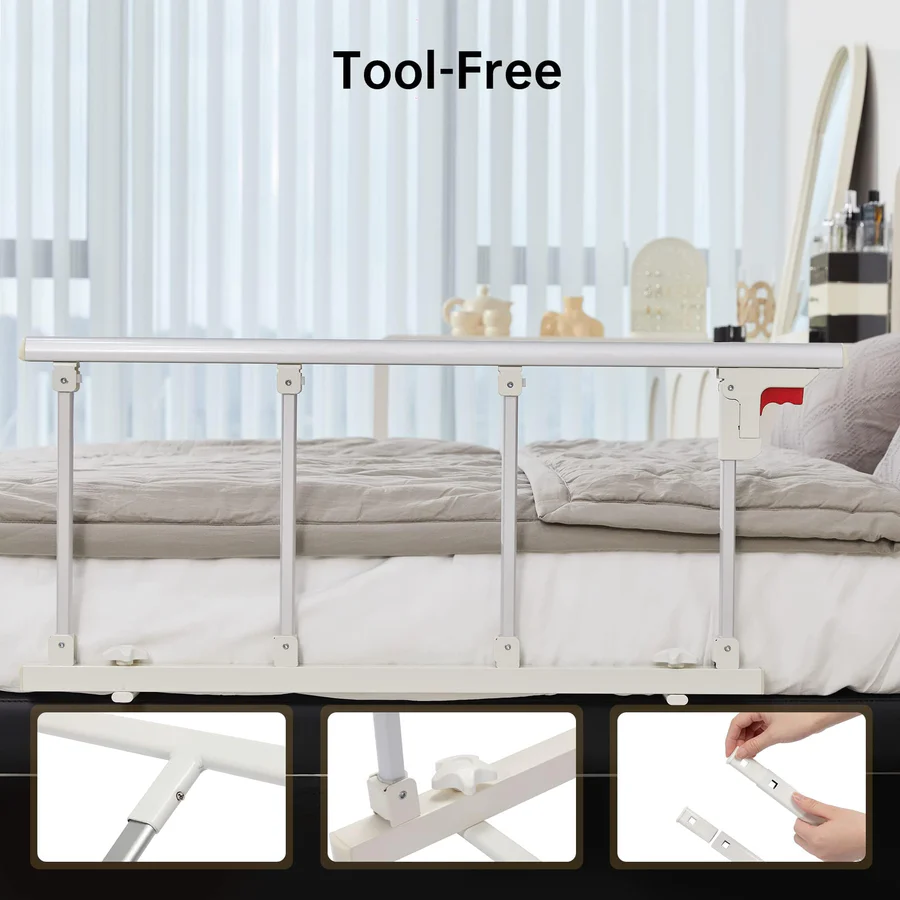
The best ones slide under the mattress and use safety straps or tension bars to hold everything in place. It should feel tight and secure without a bunch of nuts and bolts. And if it does need tools, it better be a quick 5-minute job.
6. Compact Size or Full-Length? Pick What Works
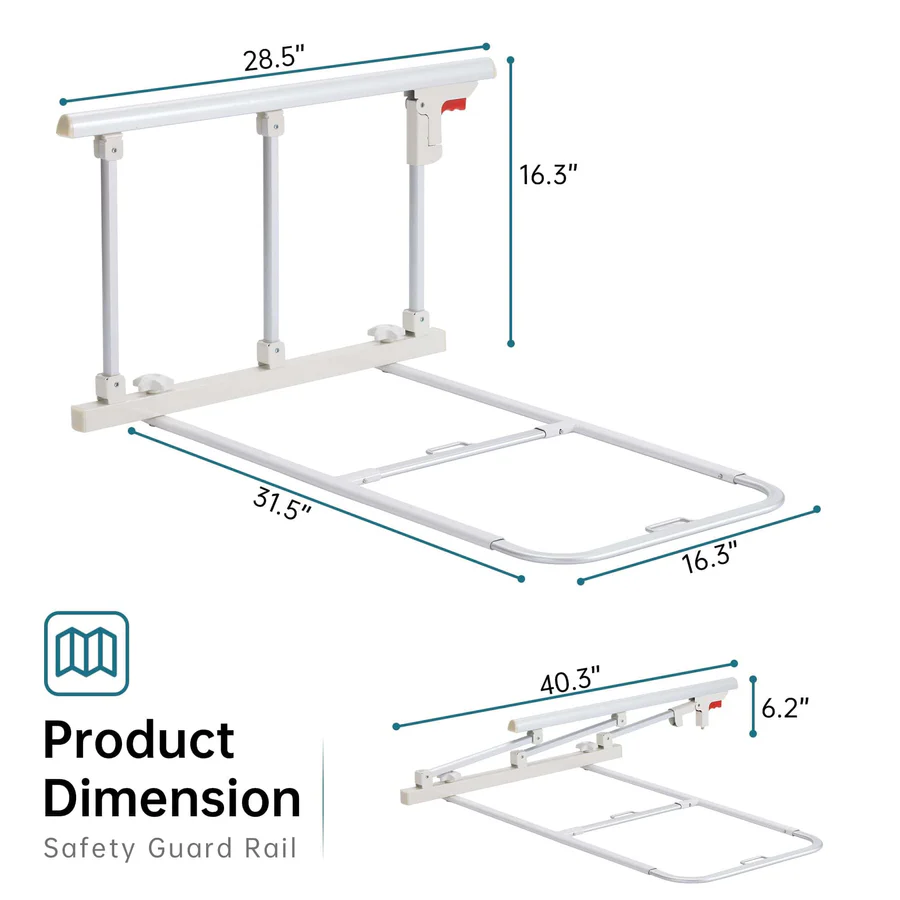
Some seniors just need a compact rail to hold onto when getting in or out of bed. Others need a full-length rail that runs along the entire side to prevent rolling out during the night.
Think about who’s using it and what their needs are. A shorter rail is great for mobility help. A longer one is ideal for fall prevention — especially if the person moves a lot in their sleep or has dementia.
Some models even let you adjust the length. Super convenient if needs change over time.
7. Built-in Storage Pouch – Keep the Essentials Close
This one might seem small, but it’s actually a big deal. Many rails now come with a pouch or organizer attached — perfect for holding a TV remote, tissues, a water bottle, glasses, or a phone.
No more stretching across the bed or trying to fumble for stuff on the nightstand. It’s all right there, within easy reach. For seniors with limited mobility or vision issues, this kind of convenience really makes a difference.
8. Works with Different Bed Types – Be Bed-Friendly
Before buying, check what type of bed the rail works with. Some only fit standard beds, while others are designed for adjustable beds, hospital beds, or even platform beds.
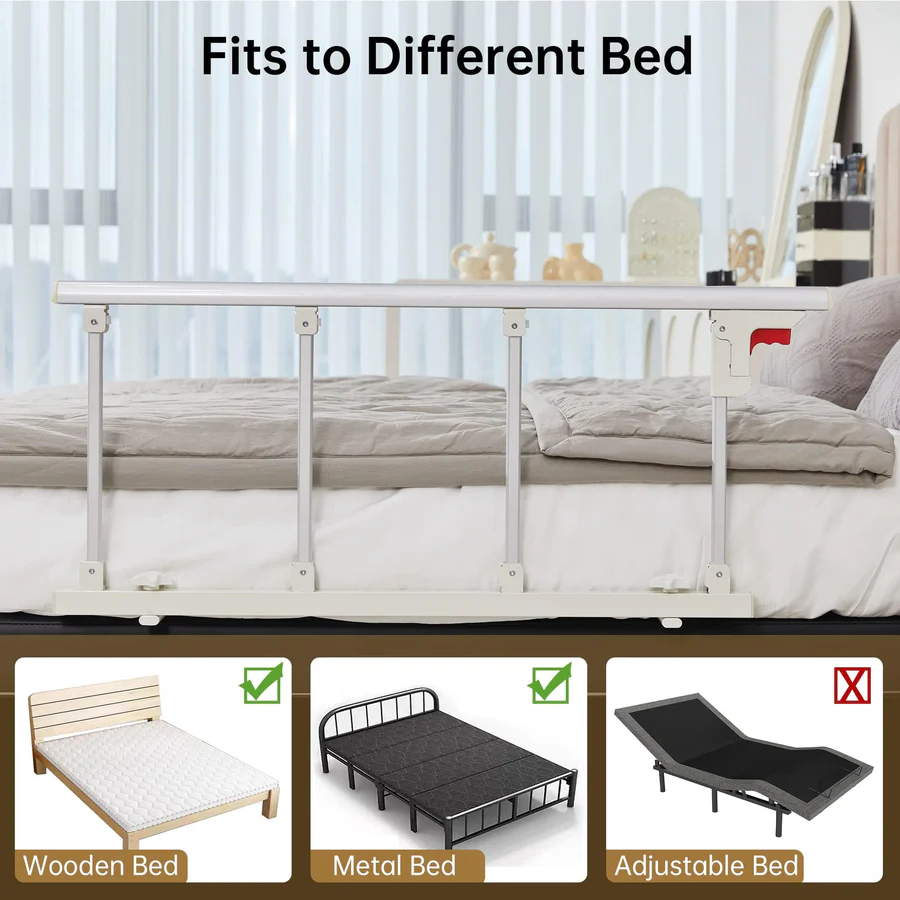
If you’re not sure, look for one that says it’s compatible with a wide range of mattresses and frames. You don’t want to unbox it only to find out it won’t fit your setup.
9. Portable Bed Rail – Easy to Move When Needed
Sometimes the person using the rail might sleep in different rooms or travel between homes. In that case, a rail that’s lightweight and easy to disassemble is super helpful.
Look for models that break down into smaller pieces or fold flat. That way, it’s no big deal to toss it in the trunk or move it to another bed in the house.
10. Fall Prevention Features – Peace of Mind at Night
Let’s not forget what most people buy a bed rail for — safety. Some models come with extra features to help prevent nighttime falls, like:
- Glow-in-the-dark strips
- Motion-sensor lights
- Safety straps for added security
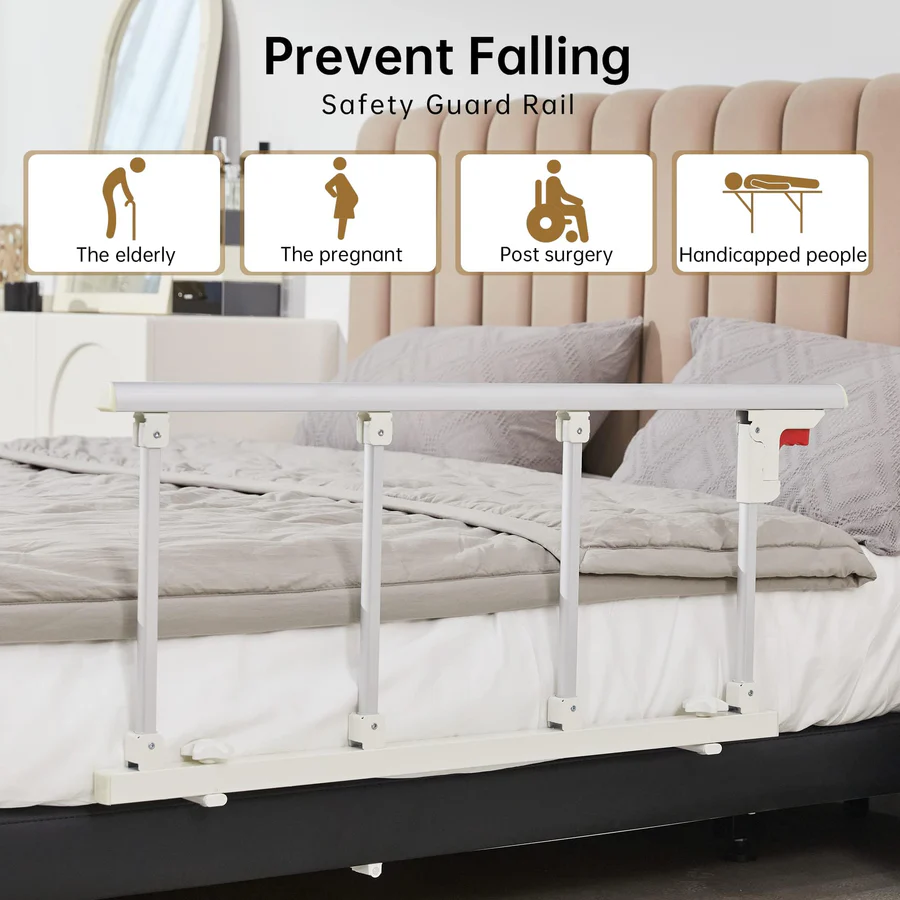
While not essential, these little touches can really help seniors feel safer getting up at night to use the bathroom or grab a glass of water.
A good medical bed rail isn’t just about safety — it’s about confidence, comfort, and helping someone stay a little more independent. Whether it’s for getting in and out of bed without help or just feeling more secure while sleeping, the right rail can make daily life smoother.
Take a little time to look at what matters most: a comfy grip, strong build, easy setup, and the right size for your needs. Once you’ve got the right one, bedtime suddenly feels a whole lot better.